Rogers & Fido Support Redesign
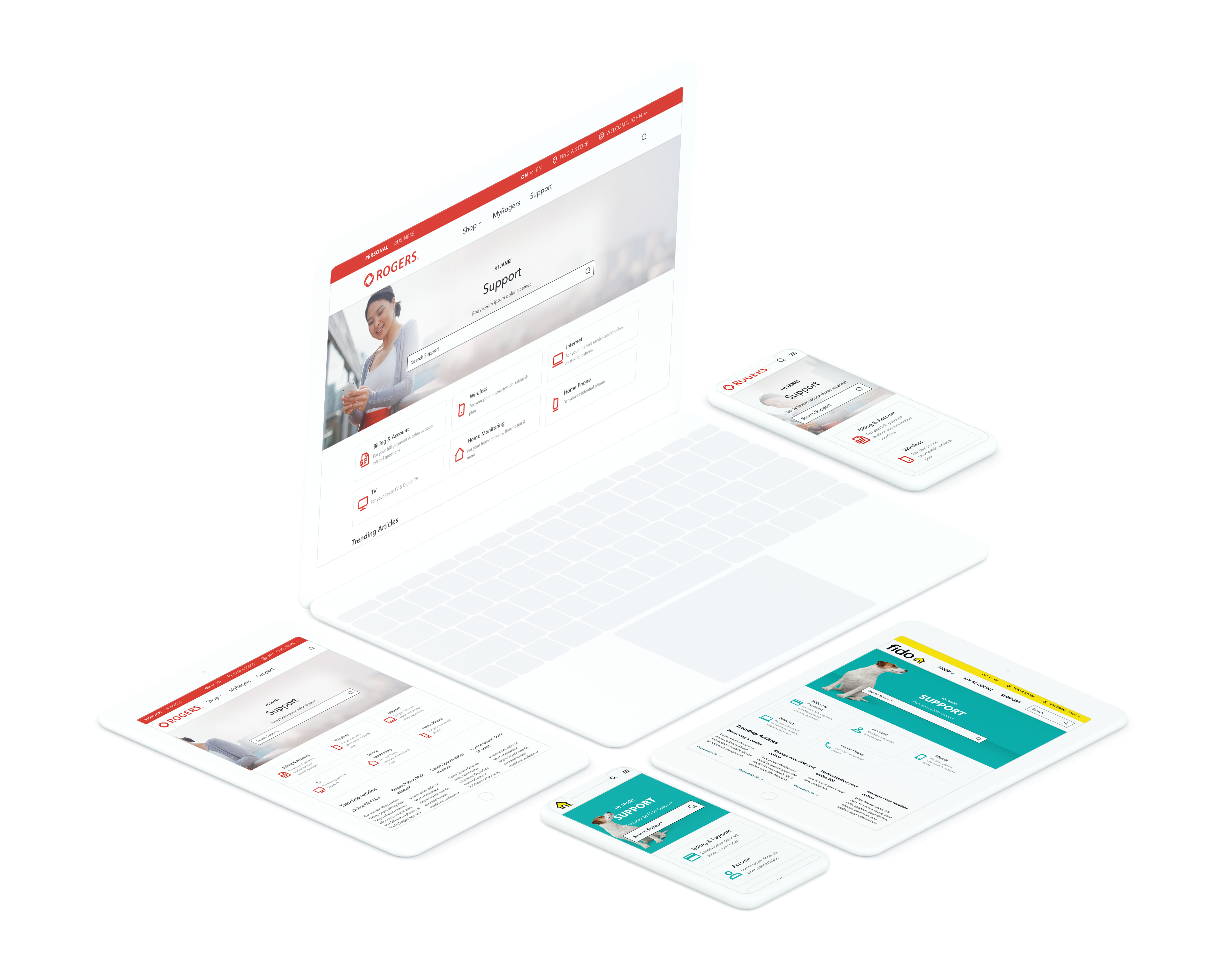
Reimagining the Rogers and Fido Support experience. Leading the product redesign efforts and winning Ted Rogers award in the process.
My Role
- Leading the entire product design from conception to end product
- Collaborating with cross-functional teams
- Coaching and mentoring designers
Problem Statement
The project was initiated to tackle the issue with lack of engagement with the support section due to difficulty in finding relevant information that could potentially assist our customers, as a result this led to a low containment rate.
Goal
Refine and improve the support experience that exists by reducing the cognitive overload and improving the discoverability of content. Allowing users to easily find topics related to their issues.
The Process
As the lead designer on the product responsible for end-to-end experience and completion. There was a clear structure that has been devised to tackle the creation process. This entailed gathering requirements, creating alignment between cross-functional teams, early research to post redesign research, marketing analysis, capturing analytics to help with decision making and to challenge preconceived notions; prior to going to design exercises which were inclusive of content audit, sitemaps, revised IA, wireframing, mocks and prototyping.

Gathering Requirements
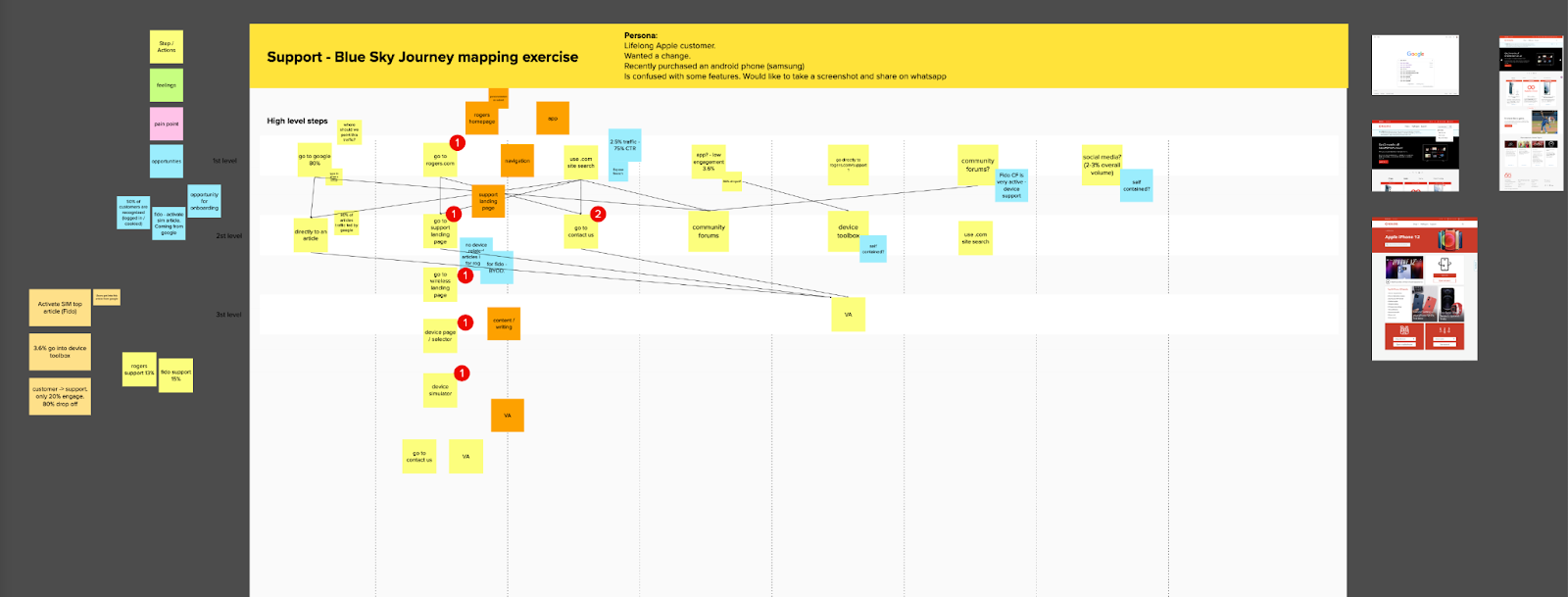
The first part of any project is to identify the problem and evaluate the business needs, as this can drive decisions regarding the redesign. There were multiple workshops with the stakeholders to help gain knowledge on what the exact need was and what the future of support entailed. There were clear alignment with multiple stakeholders to ensure best results and less friction at a later stage.
Overview
- Low containment rate, meaning many of the user coming to support are ending up calling in to care.
- New support products being introduced to help customers with their issues digitally.
- Prioritization of each topic and timelines defined and agreed upon for delivery.

Research
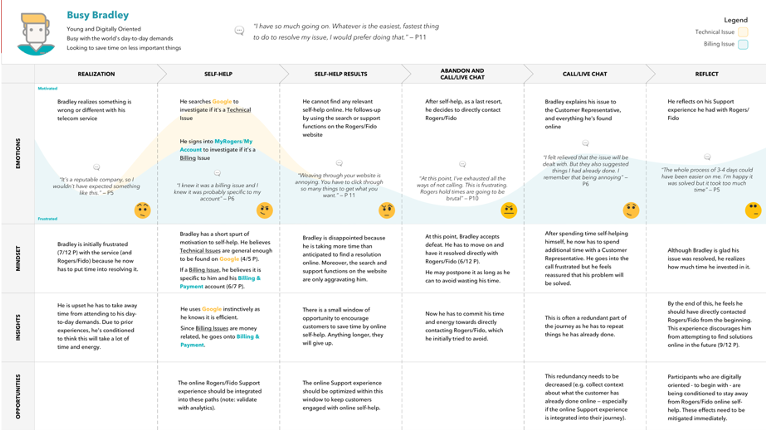
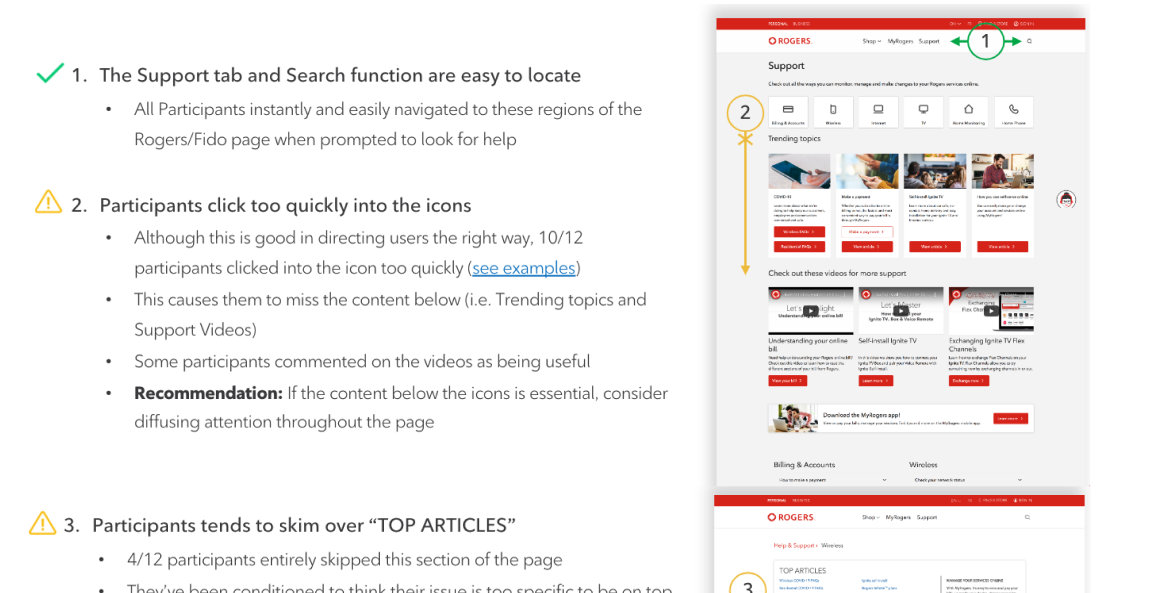
Pre redesign research was performed to discover what customers expect from support and how they interact with the old design.
Highlights
- Customers want to save time and look for self help but if it takes too long then they will contact us.
- They often skip information on page due to the amount of content on page and because they feel that their problem is too specific to be on top of the page.
- Information provided is too general and extremely difficult to parse through
Competitive Analysis
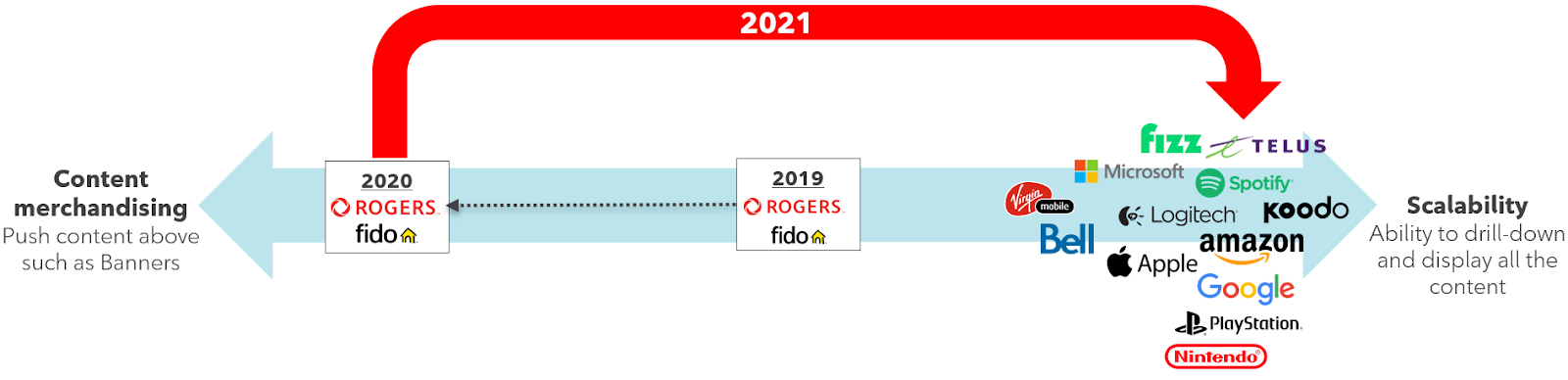
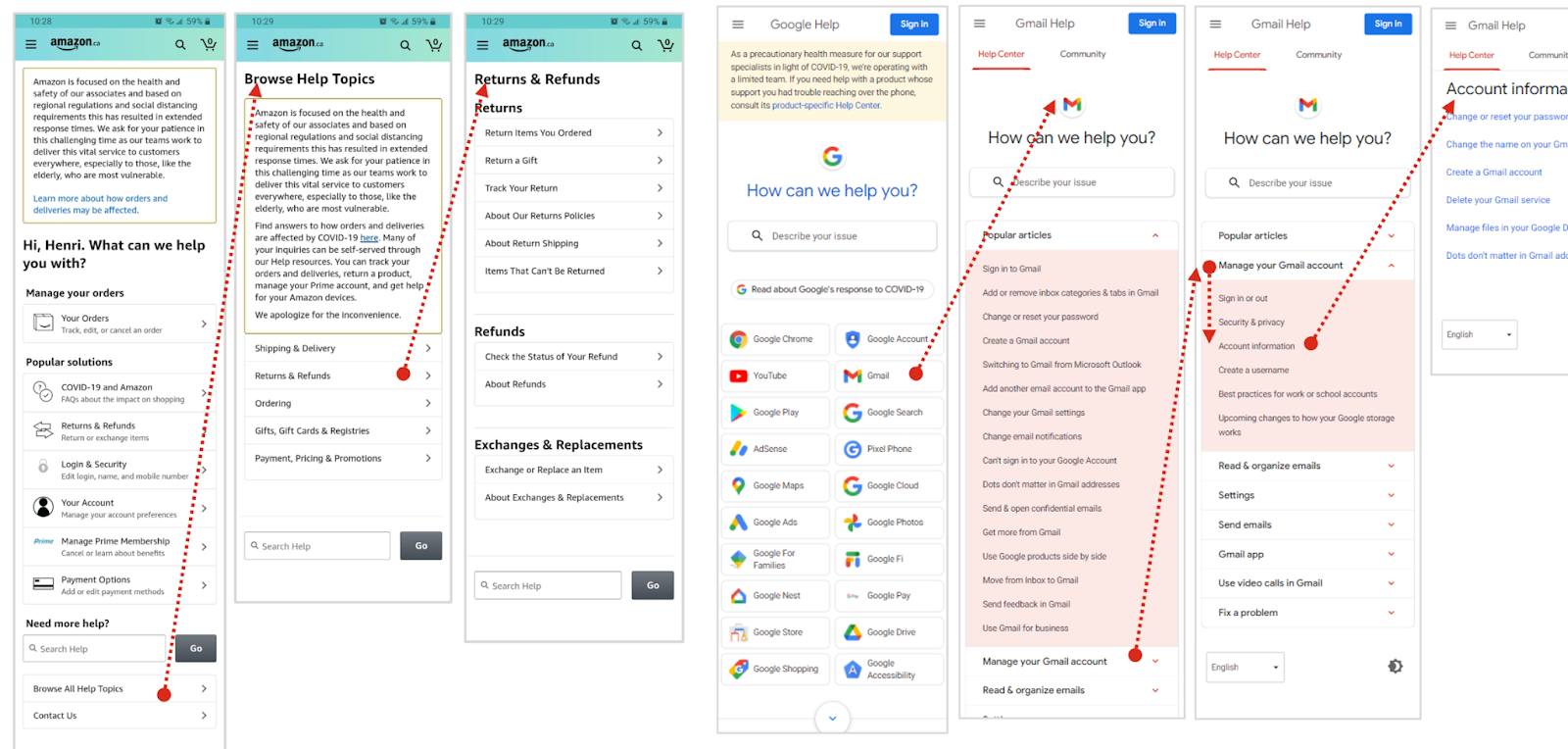
The intention was to not just look at what other Telco’s were doing but also to perform a deep analysis on how the leaders were solutioning support. This gave us a benchmark to work against, thus allowing us to present a visual representation to our partners to understand the significance of how far behind we are.
Analytics
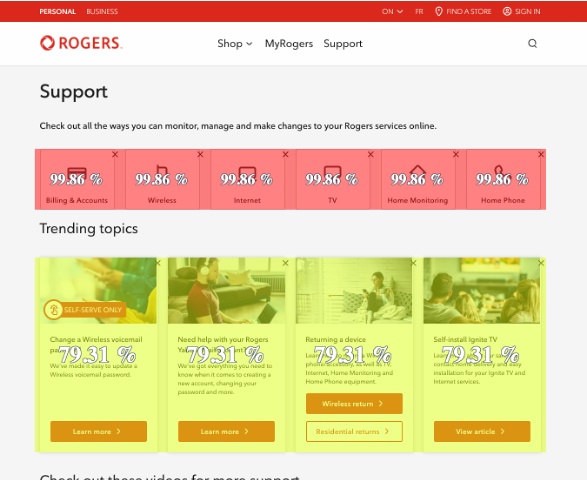
Adobe analytics and Content Square were used to gather data relating to support.
Highlights
- Low engagement on Article links and content that were below the main topics
- 50% of our customers are logged in
- Device split 60% Mobile / 38% Desktop / 2% Tablet
Information Architecture
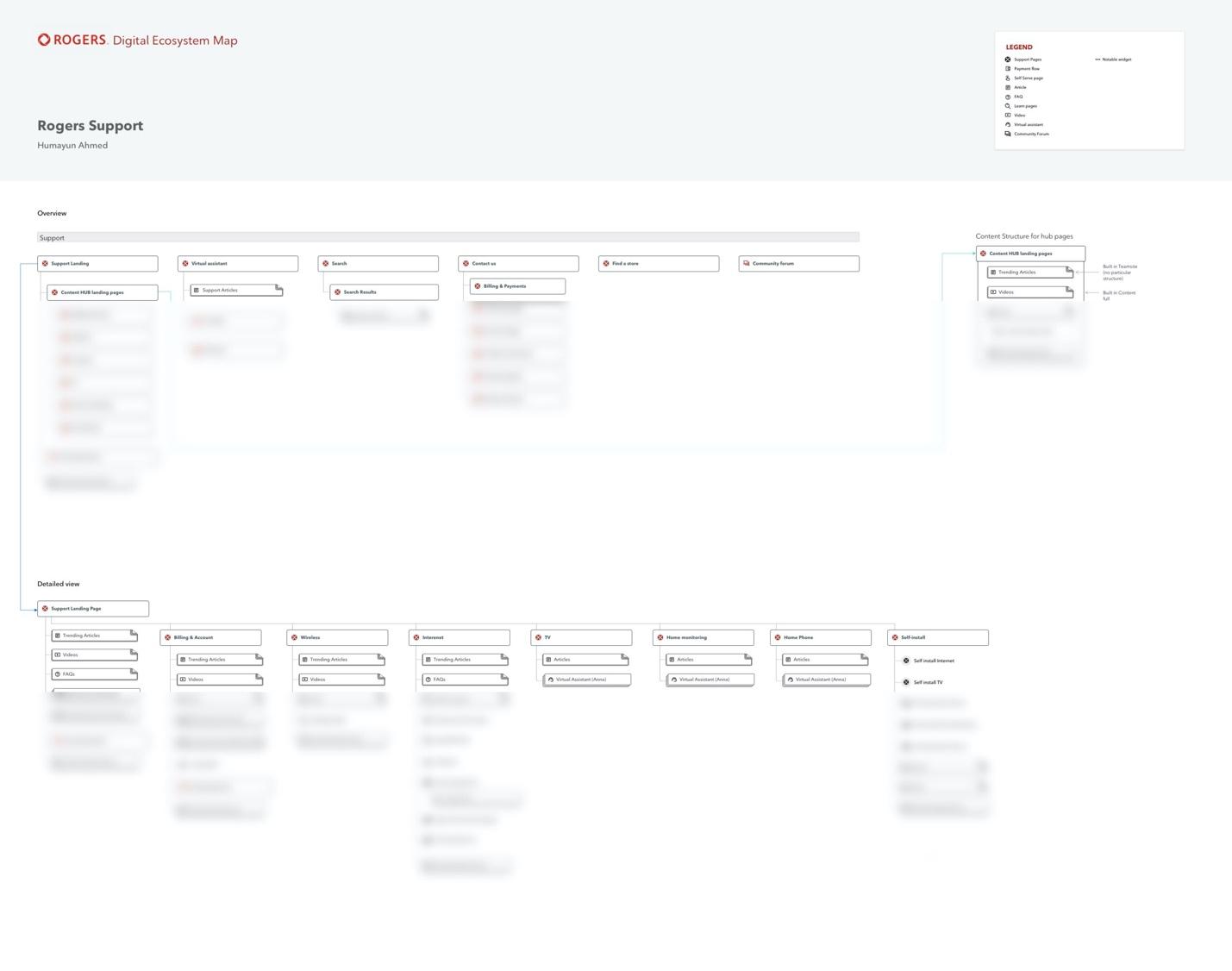
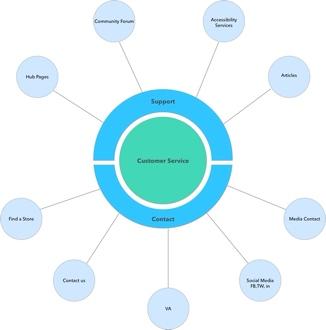
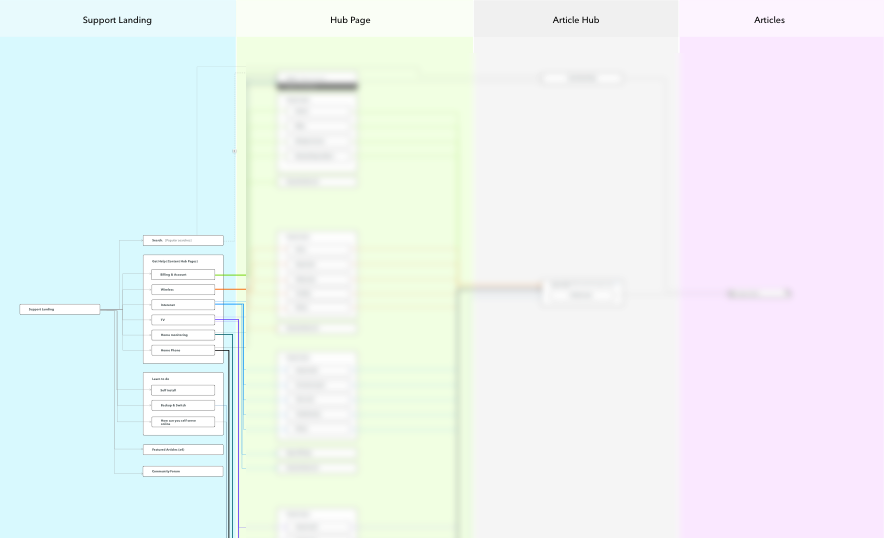
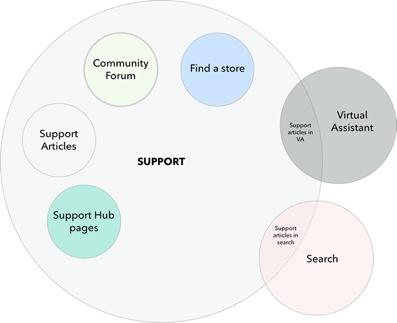
Performed a full audit on the previous support. Did an inventory check of the existing “customer service” products on Rogers and Fido, this allowed the team to have an overview of all the existing entities and view the connective tissue between each. using the information gathered by research, workshops and analytics I was able to create a new and revised structure for support.
Revamped Structure

Wireframes
After in depth research, analytics, and IA the wires were created along with task flows. Following the hierarchy constructed by inspecting data and research. Components were assembled in level of priority. Removal of overwhelming amount of content on page, and simplifying it by just having one row of articles, selected based on analytics. Search bar was also introduced as an alternative way of finding answers to user inquiry; proven to be successful in testing.

Mockups
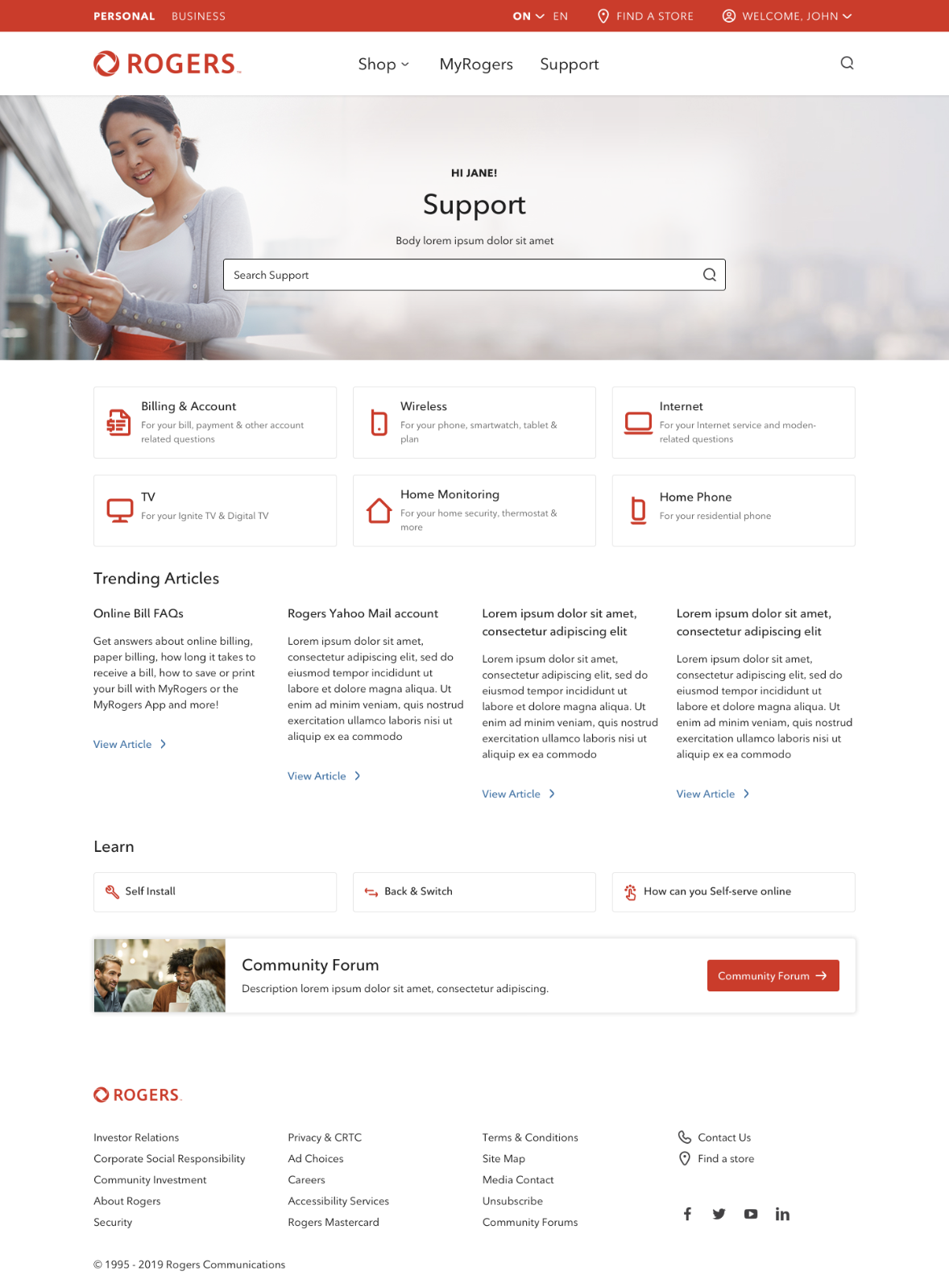
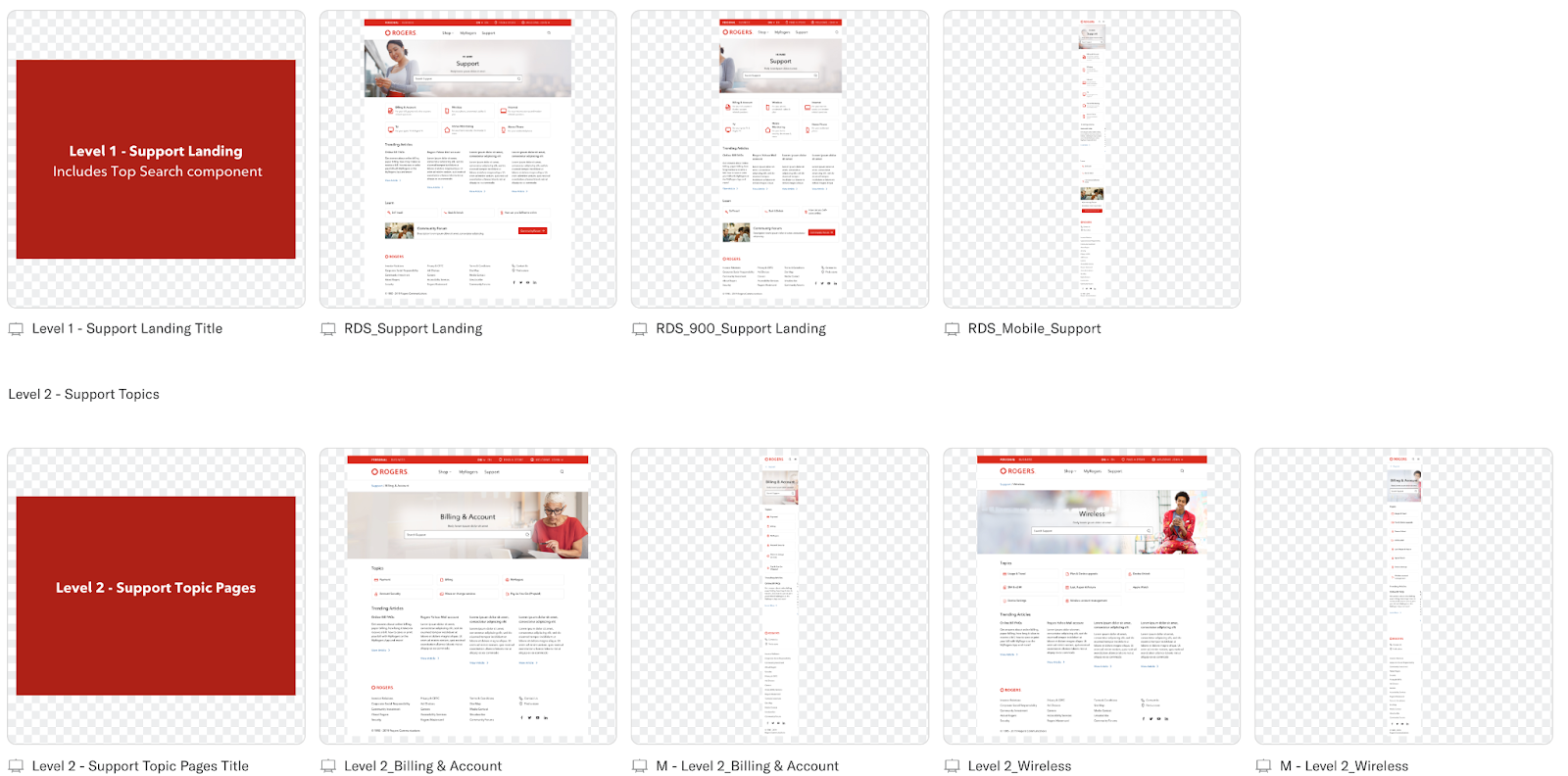
Overlooked the creation of mocks. New components were created having closely work with the design system. My team created pitches for each new component with required details. Annotations were also created to help developers easily parse through the mocks.
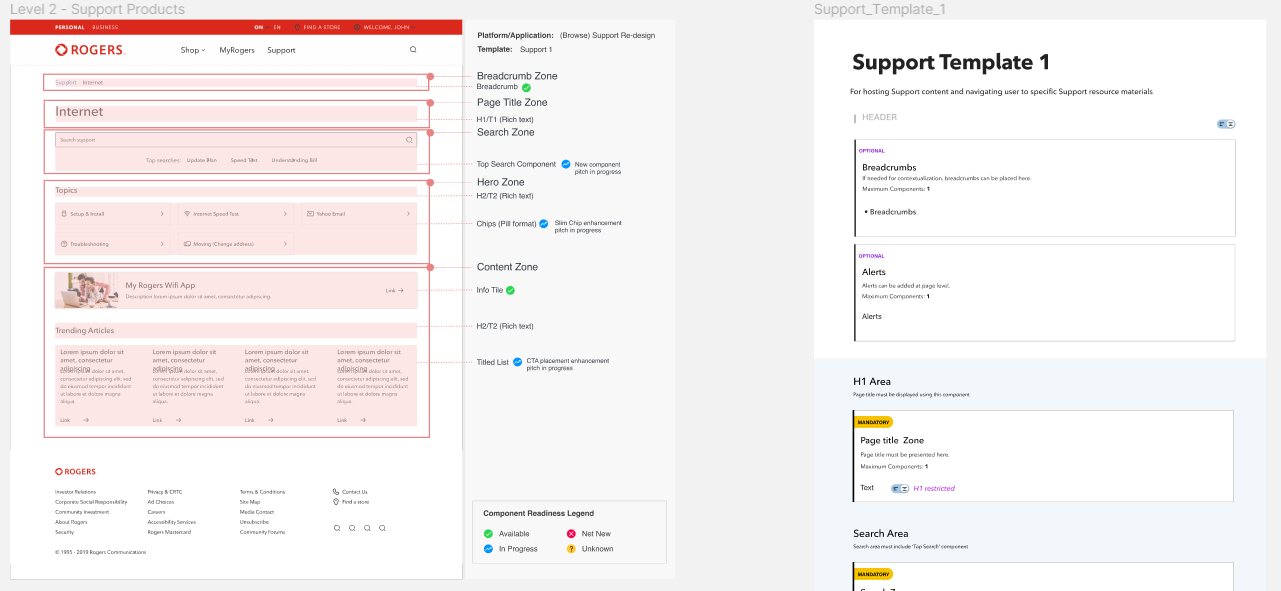

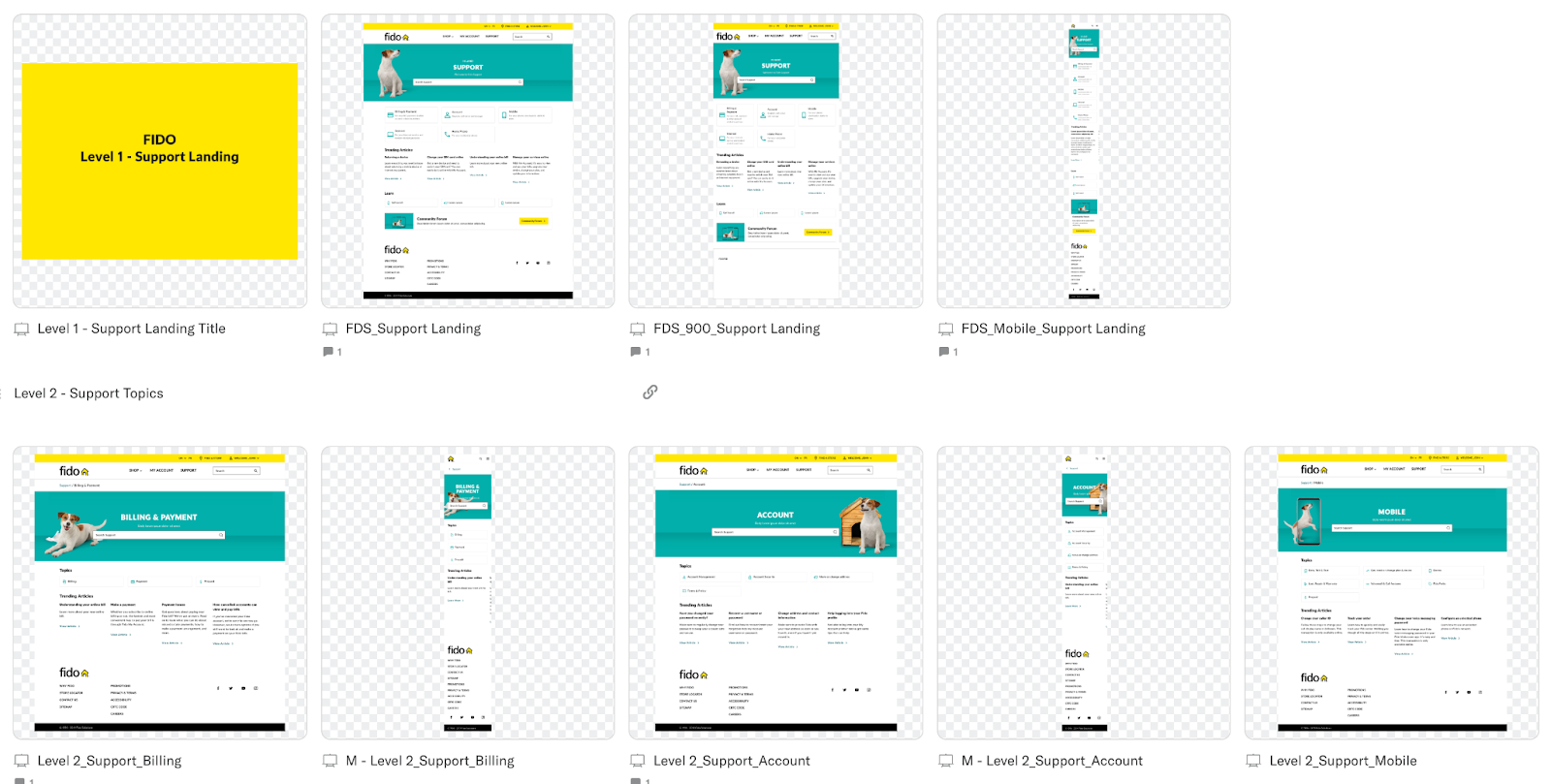
Working with the Design system
Submitting component pitches for approval and creation. Feeding necessary details into the process to help build. Furthermore updation and improving the process as needed.
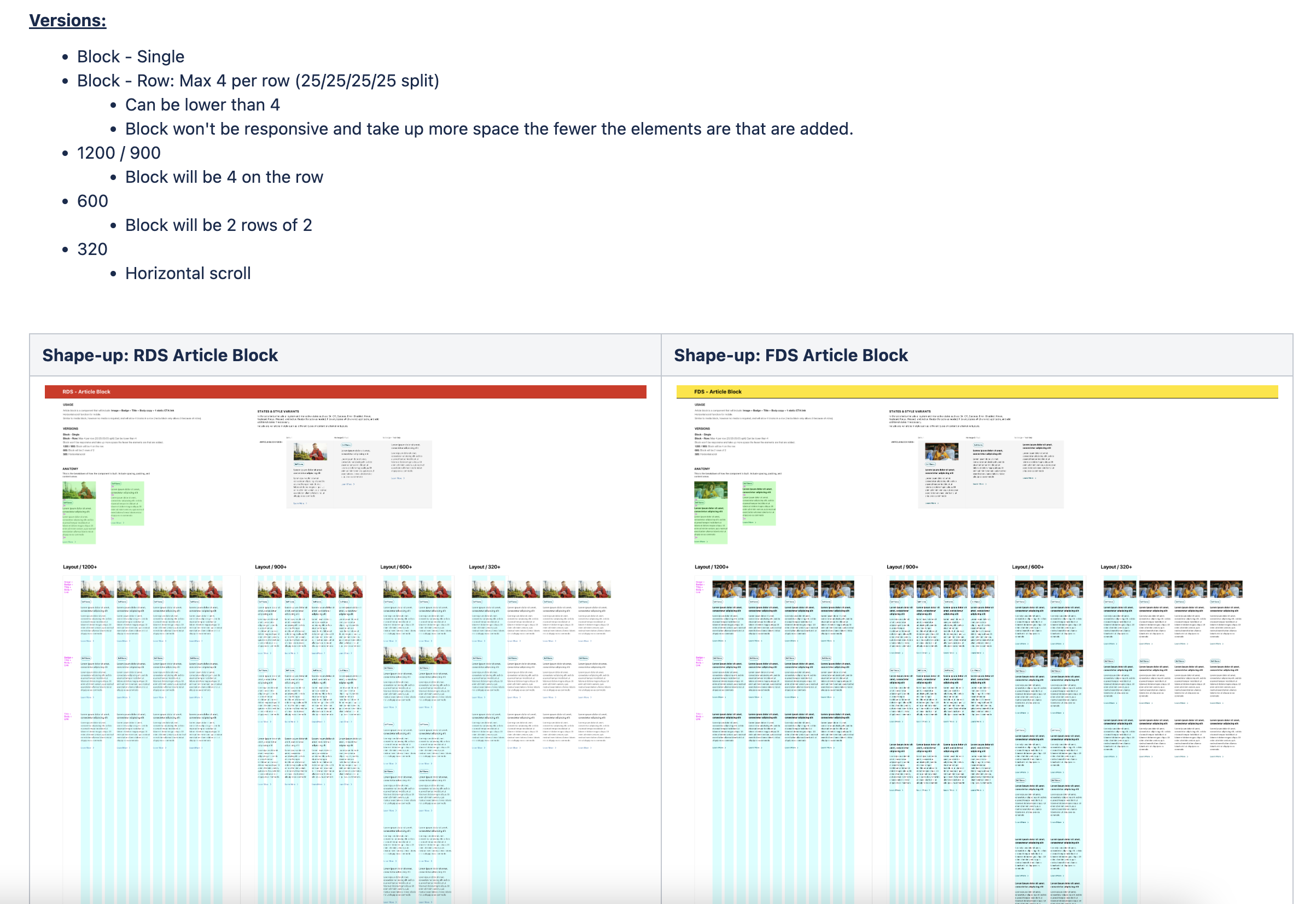
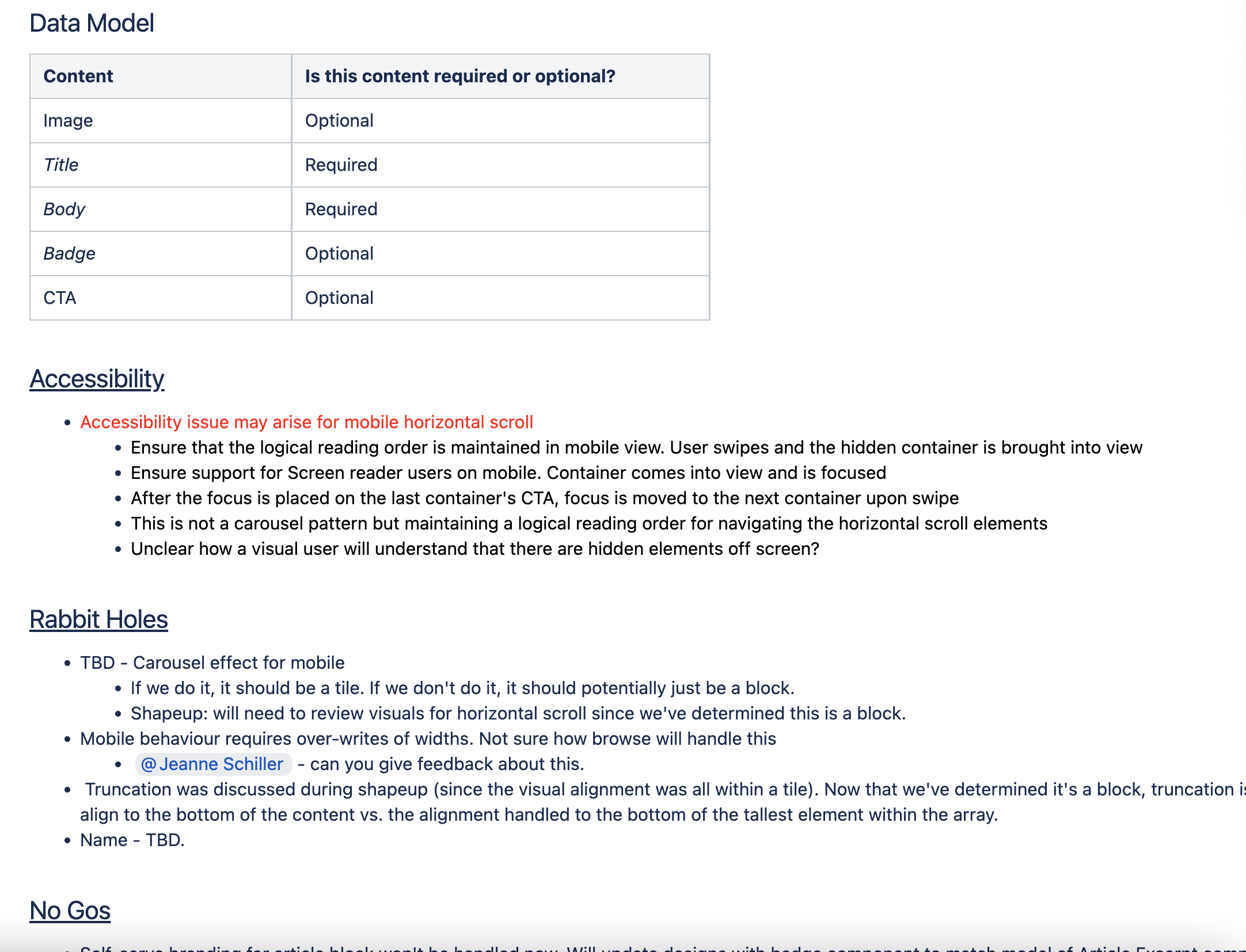
Redesign Validation research
Research was conducted to confirm the assumptions made on the redesign and to improve further based on the feedback.
Highlights
Tree Test
-
- 85% participants from the tree test felt that the support articles were relatively easy to locate.
- 71% Tree Test participants participants indicated that they are likely to use the support section if it matched the tested version.
- 87% of tasks were successfully completed. (Some sub-category labels would have to be renamed to avoid ambiguity and improve findability)
Usability Test
-
-
- 90% participants from the concept evaluation study rated the ease of finding support articles relevant to the scenarios presented as easy or very easy.
- 100% concept evaluation participants indicated that they are likely to use the support section if it matched the tested version. Participants indicated that they are more likely to search for articles rather than navigate.
-

Evolution
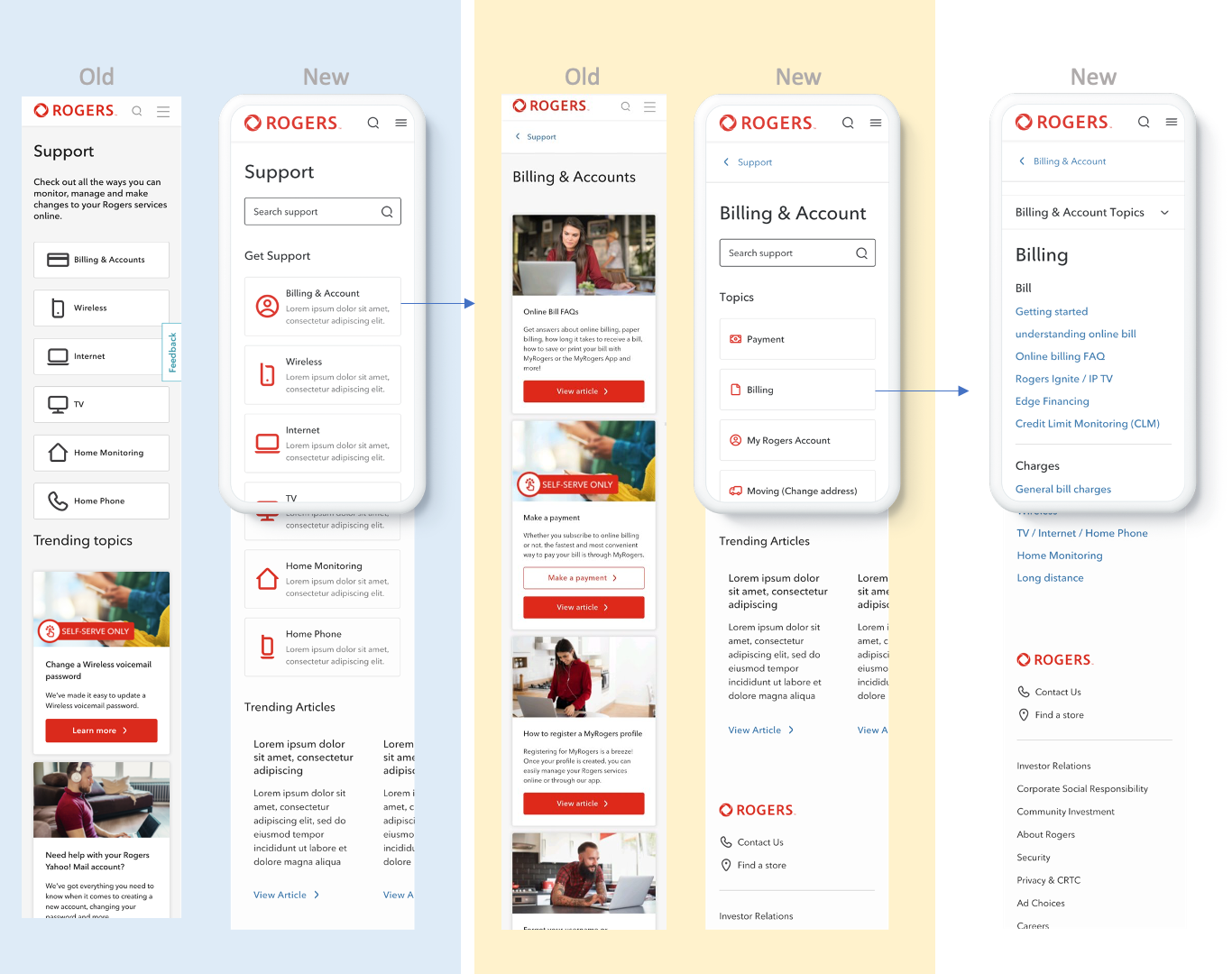
Support before the redesign had a lot of visual clutter, too many options, hard to discover related articles to customer’s issue and no clear structure. I focused on the basics of Hick’s law; the more options a user is presented with the less likely they are to engage. In the redesign, search was introduced for quick discovery, a clear flow of information by reducing the amount of options and progressive disclosing them as the user went through their journey. This ensured simplicity for the users, better scalability and allowed for a clear visual hierarchy.

Results
After the launch of the Fido version of support (closely related in structure to Rogers) , we were able to collect KPIs to further solidify the design choices. There was an overall improvement of user engagement on support. Below are some highlights.
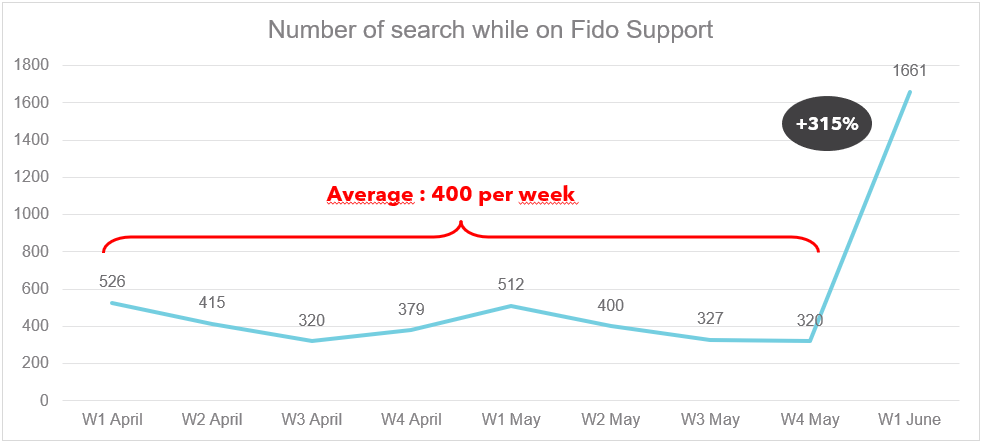
- After the introduction of search on support pages, rather than depending on global in navigation search, we saw an increase of 315% in number of searches while on support
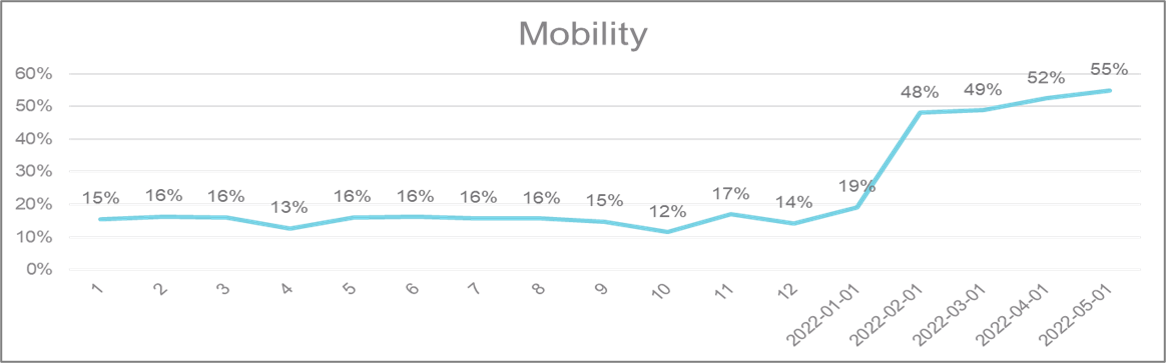
- Mobile: Before, 28% of users would scroll and reach the article section. After the redesign 78.7% of the user would click to reach the articles. ⅔ of our users are on Mobile.
- Desktop: Before, 50% of users would scroll and reach the article section. After the redesign 79.1% of the user would click to reach the articles.
- 30% increase in article view on average across all categories
- 10% increase in containment (customers using digital avenue rather than calling care)